As the River Feale moves into its middle course, it widens and slows, shaped by the many tributaries that feed it along the way.
These smaller rivers are vital to its life. As Fisheries Inspector Catherine Hayes explains, they bring “clean, cool, oxygenated water… creating habitats where fish can spawn and young fish can live.”
At Feale Bridge on the Kerry/Limerick border, the river carries history too. Local historian Larry Begley recalls the great flood of 1858:
“The water rose up to the roofs of the houses… and people scampered up on the roof.”
Further downstream, the Feale reaches Abbeyfeale, a town built around the river. Here, tributaries like the Allaghaun and the Oolagh join the Feale, adding to its flow and supporting spawning fish.
Maurice O’Connell of Abbeyfeale Community Council says the river once sustained the entire town:
“The river Feale was the economic viability for the people living here.”
For generations, the river sustained the town, even supplying fish to markets as far as Dublin.
But the Feale is changing.
“Water treatment plants and agricultural runoff are two of the main pressures,” Catherine Hayes explains, highlighting concerns around water quality.
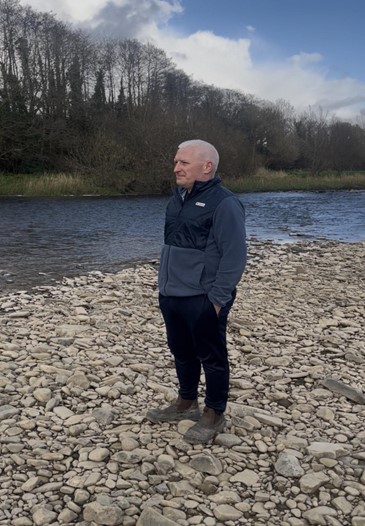
Timmy O’ Sullivan at Relihan’s Inch, Kilcara, Duagh
Along the banks, anglers see that change firsthand. Timmy O’Sullivan of Abbeyfeale Anglers Association says:
“You were guaranteed to catch either a salmon or a trout… but it’s not as productive as it used to be.”
Flooding is also reshaping the river.
“There must be 30 feet of that high bank gone… it’s just been eaten away.”
Despite the pressures, the Feale remains rich in life from salmon and trout to kingfishers and otters - a river that continues to shape the landscape, and the communities along its banks.